
If you know you know about Mill Song Crêpes sauerkraut… It’s m
ade by Ryan’s wife, Erin, and is some of the best sauerkraut I’ve eaten. What makes it so unique is that s
he adds whole peppercorns.
Once the peppercorns are fermented, they are more palatable to eat whole, and you get to experience their beautiful fragrance. I love enjoying it on a crêpe!
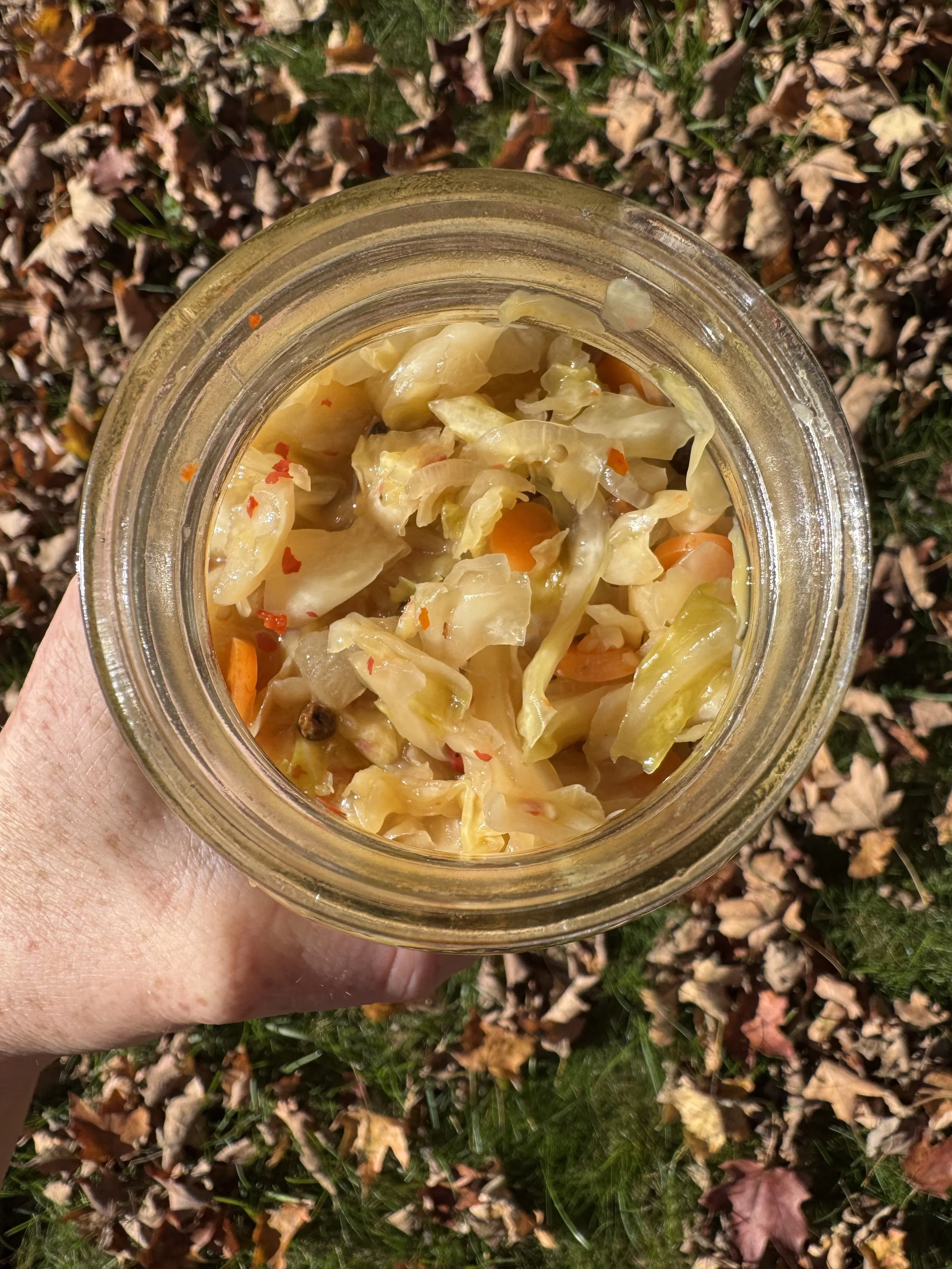
Well, this recipe is a riff on Erin’s so I can enjoy the lovely peppercorn flavor at home. I found 3 colors of peppercorns in my spice cabinet, so I decided to add all of them. I really wished I had green peppercorns to make the peppercorn quadfecta, so I added chili flakes instead.
If fermenting scares you, check out “The Most Helpful Fermentation Guide on the Internet” by Mike G. The immunity benefits of sauerkraut, especially as we move into winter, are worth following the fear and trying this out! Cheers!
By Halee Jones
Ingredients
1 head Cabbage*
1 Onion*
3 Garlic cloves*
3 Tbs Black Peppercorns
2 Tbs Pink Peppercorns
1 Tbs Chili Pepper Flakes (bonus points for green peppercorns instead!)
½ Tbs White Peppercorns
½ Tbs Coriander seeds*
2% weight of Salt
*These ingredients can be found at the Harrisonburg Farmers Market, check What’s Fresh to see what’s in season
Method
Prep ingredients. Cut the cabbage into ¼ inch slices and slice the onion, garlic and carrots into thin slices. Reserve a few large cabbage leaves.
With a bowl on a scale, tare, add all of the ingredients and weigh.
Measure the weight of your ingredients and multiply it by 0.02 (for 2%). (Ex. Ingredients weigh 1330g, 1330gx0.02=26.6g). This is how much salt you will add.
Measure the salt.
Mix the salt with the vegetables and spices. Massage until the cabbage is coated and slightly broken down.
Let sit for 1 to 2 hours.
Pack the sauerkraut firmly into a sterile jar(s), leaving about 3 inches of headroom.
Take a cabbage leaf and push down until all of the vegetables are submerged under liquid. You can add some additional water and salt if needed. Then, optionally add a weight on top. You want to make sure all of the vegetables are under water the entire ferment.
Cover and let sit in a cool, dark place for one to three weeks. Every few days, open your jar to let air out. After one week, taste and decide if you like the texture and taste. If so, move your jar to the fridge. If not, ferment for up to two more weeks, tasting every few days.
If you see any signs of extreme bubbling, off smells, and/or mold growth, your ferment has been compromised and should be thrown out.
Store in the fridge for up to 3 months. Your kraut will slowly keep fermenting in there.
Enjoy!
